
The Kanban Maturity Model (KMM)

The Kanban Maturity Model was developed by David J. Anderson and Teodora Bozheva. It’s a descriptive framework for mapping the Kaban method’s adoption levels within a company, existing to assess and guide the growth path. The concept grew out of the authors’ professional experience in guiding companies through their Agile transformations. With the model’s help, planning a structured route to achieving an efficient, predictable workflow becomes possible for any company looking adapt and evolve.
Level 0: Oblivious
This maturity level describes either the absence of Kanban practices or, more commonly, the lack of any structured approach to collaborative planning. As a result, the process outcomes have little to no predictability, and the team has not spent any time considering the value stream. All in all, great place to begin the Kanban journey!
Level 1: Team-focused
Here, the first steps towards a collaborative workflow creation have already been taken. The team likely has a Kanban board, broadly depicting its process, and making room for considering the policies guiding task moves between specific steps. Team members are also gaining awareness of the system’s openness to them owning the process, and making improvement suggestions.

Level 2: Customer-driven
It’s the first taste of a mature Kanban implementation, where the work the team does begins to align with what the customer asks for. By mapping the value stream - as seen by the customer, the team gains an understanding of the forces motivating their workflow, allowing them to respond to customer demand with more precision. Not yet perfectly, but much closer to the desired outcomes.
Level 3: Fit-for-purpose
Level 3 is a clear progression from the customer-driven flow, centered on perfecting the delivery consistency, predictability, and speed. For that purpose, the team begins to track basic process metrics, such as lead time, throughput, and cumulative flow. With better management of upstream and downstream flows and precise trend measurements, the team grows its strength and confidence levels.

Did you know?
Kanban Tool® boards automatically generate powerful process metrics for your teams - right out of the box. It’s an easy way to launch team- and company-level Kanban boards, gaining analytical insight into how the work flows.
Try the service today to see the impact with your team!
Level 4: Risk hedged
Building on data-based process analytics from level 3, the team can begin to manage risk in their project, further increasing predictability and proactively resolving impediments. It’s the stage at which the organization can embrace the all-important continuous improvement strategy, treating regular feedback loops as a valuable opportunity to better align with customer needs and perfect cross-departmental collaboration.
Level 5: Market leader
A level of Kanban adoption so high that it becomes noticeable in the wider market, with other companies beginning to take inspiration from it. The entire pipeline, from customer/market needs analysis through delivery management, internal dependency handling, cost analysis, and risk mitigation, is approached through scaled Kanban practices and remains forever open to incremental improvements.
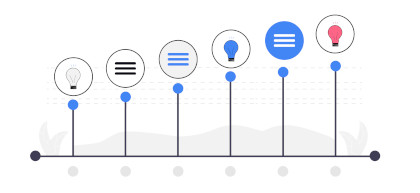
Level 6: Built for survival
The absolute summit of a company-wide Kanban implementation, making the organization highly agile, able to swiftly respond to market changes and survive anything the business world throws at it. Reinventing itself is more than possible - it is structurally facilitated, as the system has now been built to adapt one step at a time, throughout all processes.
The Kanban Maturity Model gains
As a high-level performance assessment framework, KMM is mostly utilized by Agile/efficiency/improvement coaches, as well as mid- to high-level company managers. It can, however, guide Kanban adoption for companies of any size, thereby democratizing the simple yet effective method.
Relying on the model to map Kanban adoption helps to:
- Better respond to customer demand
- Trim all workflows from unproductive “busy” work
- Increase workflow stability, predictability, and velocity
- Build team ownership/stewardship of the process
- Mitigate risks, losses, and create responsiveness to volatile market changes

Kanban Maturity Model is a helpful mechanism for tracking change in a company aiming to increase its agility and resiliency. Although relying on the model cannot guarantee your success, it offers a map of milestones to aim for, giving your teams the best chance of progress.
The key point to note is that - just as with all-things-Kanban - KMM may describe the path to take, but the journey has to be ongoing. Continuous improvement is ingrained in the method, and exactly what makes it so universally successful.
 Český
Český Deutsch
 Español
 Française
 Italiano
 Polski
 Português
 Русский