
Blog
Weekly Kanban Check-In: Stay in Flow04 Mar 2026
When used effectively, a team's Kanban board is a living system that tracks the state of work. But when it drifts from reality: cards pile up in odd places, blockers are being ignored, team members vanish from the flow - its value rapidly declines. A once-a-quarter overhaul, while helpful, will not solve the problem in the long run; what's needed are quick but regular tune-ups. Performed weekly or bi-weekly, such reviews can keep the system sharp and reliable, without adding too much overhead.

Below, we propose a simple checklist turning board maintenance into a ten-minute ritual. Think of it as preventive care: quick checks that stop dysfunction before it grows into something bigger, impacting your teamwork for months.
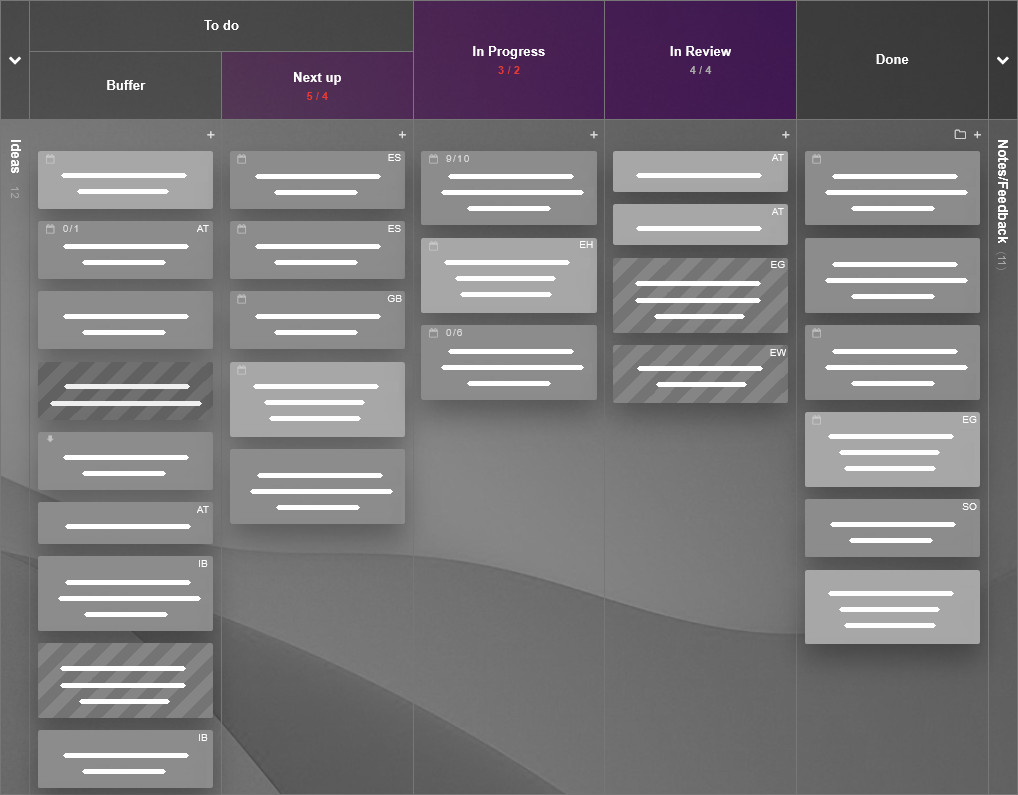
1. WIP limit violations
Why it matters: Work-in-progress limits are the backbone of Kanban, preventing overload and maintaining the team's focus on finishing tasks over constantly starting new ones. Violations are early warnings of bottlenecks or hidden multitasking.
How to check: Look over each column with a limit: is the card count exceeding the cap? If so, note whether this is due to a one-time spike, e.g., someone is working on an urgent request, or the result of someone blatantly ignoring the limit.
Action: Flag WIP limit violations for discussion during the team’s next stand-up. Don’t adjust the limits; work on revealing process issues.
2. Stale tasks
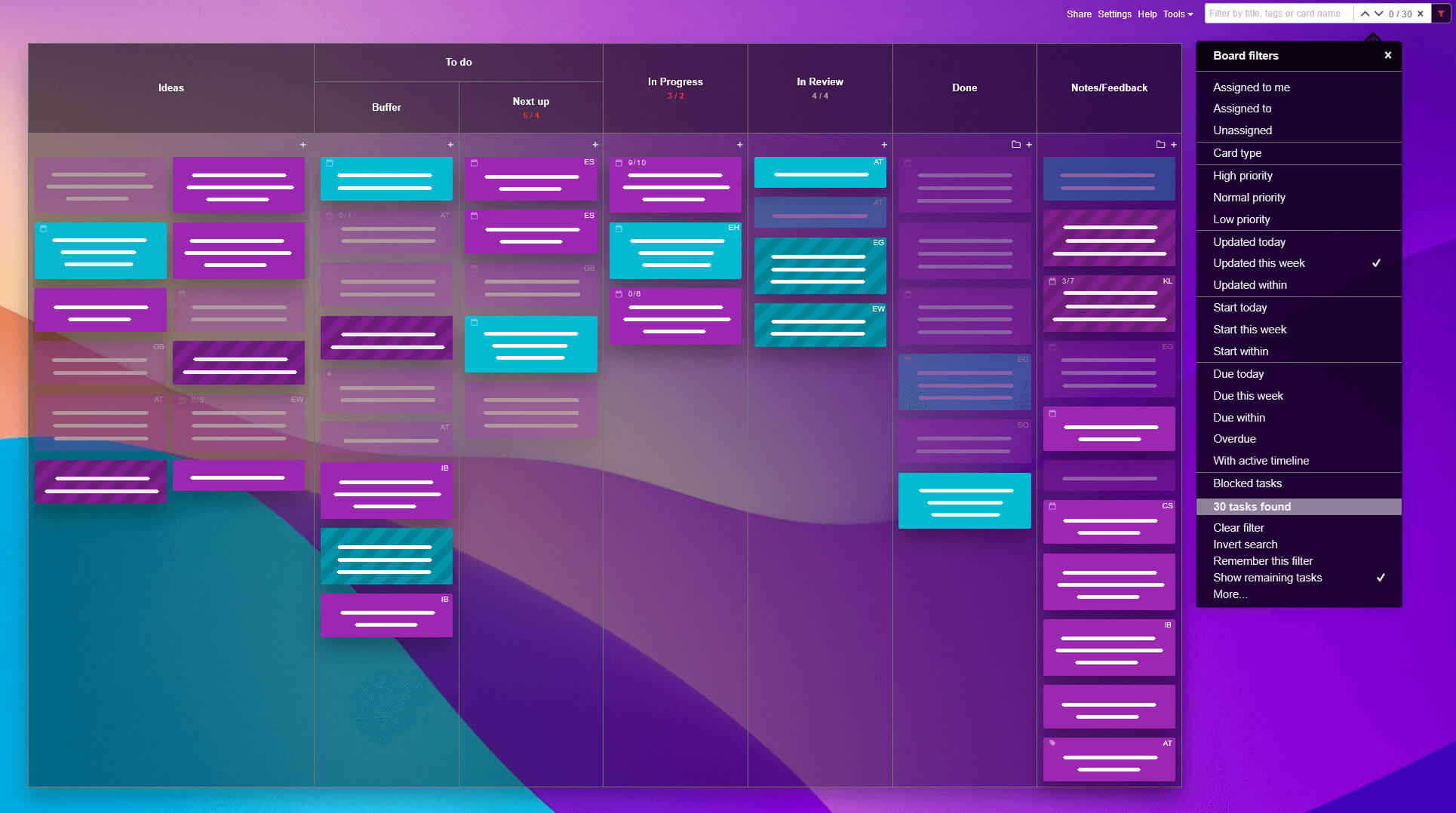
Why it matters: If a task card hasn’t moved in a week, it is either blocked, forgotten, or irrelevant - all three are risks to flow.
How to check: Filter the board to show last updated items, immediately showing anything that has stood still beyond the team’s agreed “staleness threshold” (e.g., 7–10 days).
Action: Tag the card, or change its type to stale. Then, either reactivate it with a clear next step, mark it as blocked and designate a team member who can unblock it, or archive/delete it if the work is no longer needed.
3. Blocked items
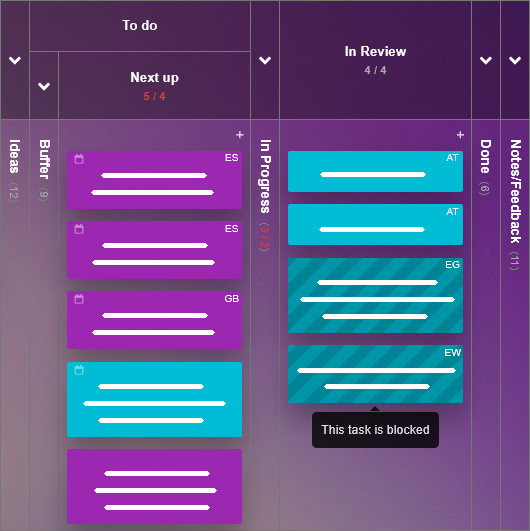
Why it matters: In Kanban, blockers are supposed to trigger swift resolution. When they sit unchallenged, they are a signal that the team accepts both friction and process immobility as normal.
How to check: Look for any cards with a “blocked” marker. Are they older than a few days? Are the causes of the blockage described clearly and in detail, or are the reasons vague or missing altogether?
Action: Escalate blockers that exceed a few days, assigning an owner responsible for clearing them, even if they’re impacted by external dependencies.
4. Workflow fit
Why it matters: The layout of your Kanban board is based on a hypothesis about how work moves, but reality changes. If tasks repeatedly skip columns, get fast-tracked, or never make it into the system, the board's workflow no longer reflects how the team really operates.
How to check: Look for patterns such as skipped columns, cards with unusual and long annotations, and recurring “miscellaneous/other” types of work.
Action: Adjust the board design as soon as a difference is spotted. Add, merge, or rename steps so the flow matches actual practices of the team. A board that doesn’t fit the team's reality turns into a meaningless theater.
5. Inactive team members
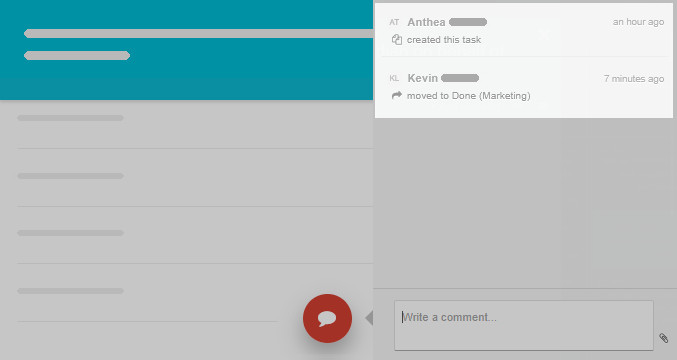
Why it matters: Kanban visualizes collective flow. If a specific team member never touches the board, it’s a warning: either their work is invisible, or they’re disengaged - in either case, it erodes trust in the system and your ability to track work.
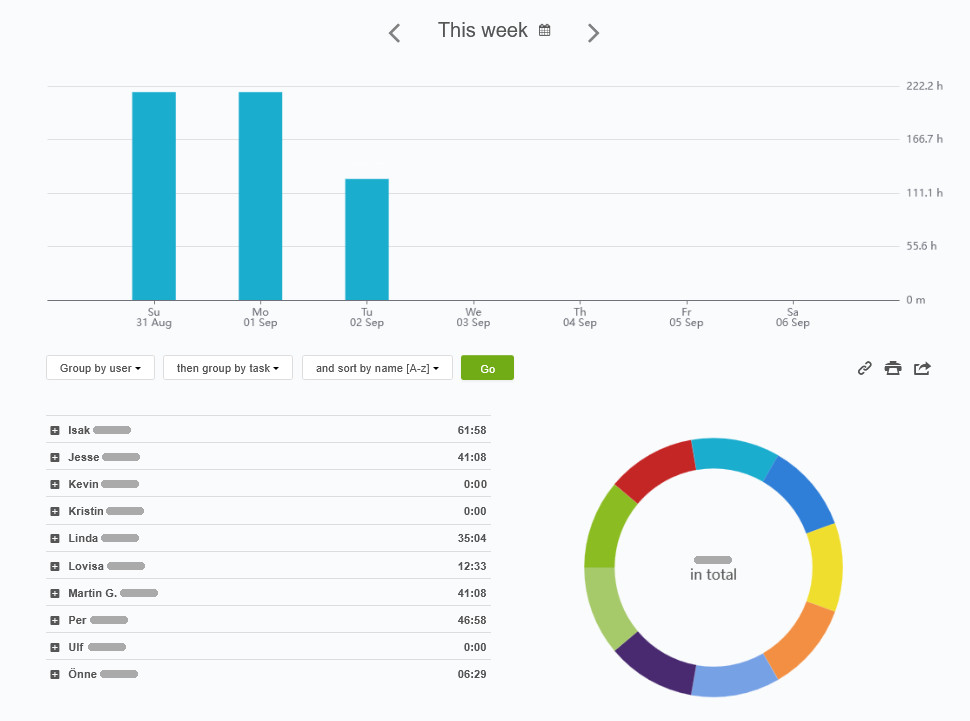
How to check: Review last week’s activity per team member; who moved or created cards, who updated the tasks' status, who tracked working time, who posted task comments?
Action: Invite inactive members to clarify their engagement. Is their work tracked elsewhere? Are they overloaded, or stuck? Are they even part of the process? Bring their flow back into visibility.
6. Board noise
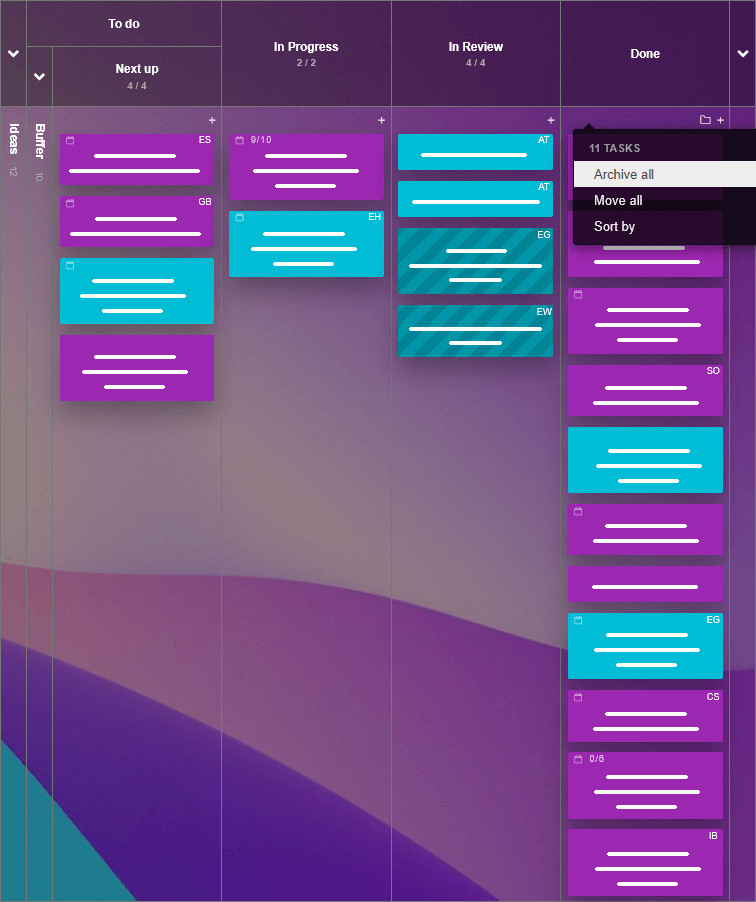
Why it matters: Noise and clutter on a Kanban board dilute the signal. Extra swimlanes, obsolete tags, and completed cards that linger for weeks slow down scanning and obfuscate priorities.
How to check: Browse every column with a fresh eye. Are there old completed cards still visible? Tasks that require no action whatsoever? Tags and card types that no one uses? Columns that never hold anything?
Action: Archive old work, prune unused labels, and simplify the board layout. The goal is to afford clarity at a single glance, not build complexity for the sake of making the work appear significant.
A weekly tune-up checklist
Below is a checklist template you can schedule as a recurring, weekly reminder. Run it at the end of each week:
Weekly Kanban checklist
- [ ] Check WIP limit violations and take note of patterns
- [ ] Flag stale cards (> 7 days unmoved)
- [ ] Review blocked tasks (> 2 days unresolved)
- [ ] Spot workflow mismatches (skipped/fast-tracked work)
- [ ] Confirm all team members are active on the board
- [ ] Clear clutter: archive done, prune tags, simplify lanes
Estimated completion time: 10-15 minutes.
Why this will work
A simple checklist like this turns the potentially vague and cumbersome board maintenance job into a rhythmic action, not a rescue mission. Instead of waiting for dysfunction to accumulate, the team keeps the system lean and accurate with minimal, but regular effort. Over time, a board with this level of accuracy will become a trusted map of the team’s tasks and performance.

Sign up for a 14-day free trial
to test all the features.
Sign up now and see how we can help
your organization deliver exceptional results.
 Český
Český Deutsch
 Español
 Française
 Italiano
 Polski
 Português
 Русский