
Blog
Spotting Kanban Erosion Before It Spreads14 Oct 2026
A Kanban board thrives on process visibility and task flow. A fine-tuned board will expose all commitments and allow the team to make decisions based on reality rather than gut feel or opinion. However, even seasoned Kanban teams can sometimes notice their practice beginning to erode. It's rare for the collapse to take place suddenly - it usually creeps in quietly through small deviations from the process, each easy enough to excuse on its own. However, when left unchecked, these discrepancies accumulate to a systemic breakdown.

In this article, we outline how to detect the early warning signs of system malfunction. We highlight concrete red flags, the need to differentiate between problem symptoms and their root causes, and offer straightforward course corrections to restore flow without a painful reset.
The first signs of a board in trouble
The board is there to tell a story; by reading it carefully, you can see if the story is about steady progress or slow disintegration. Here are a few clear signals that something is off:
1. Overfilled columns
When the number of cards in a column swells beyond the set Work-in-Progress limit, the balance of your system is already strained. A development column with fifteen tasks, where the policy states a maximum of three, isn’t “busy”, it’s dysfunctional. As work queues up and any collaboration gives way to multitasking, the visual management principle - the very heart of Kanban - loses all credibility.
It's not so much the raw number that matters here; it’s the loss of trust in and respect for the limit. It means the team no longer treats the WIP limit as a policy, but more as a suggestion. Clearly, at that point, the system has no constraints left.
2. Stale tasks
Untouched tasks sitting idly are one of the most reliable signals of project risk. Every item on the board has an implicit clock running; when it stretches far beyond your team’s normal cycle time and the ticket continues to sit unresolved, flow turns into blockage.
Furthermore, the longer a task ages, the less accurate any estimates become, the more difficult it is for the team to recall context, and the likelihood of it eventually being abandoned increases. If your “In Progress” stage holds cards predating the last release, you are not doing Kanban; you're just keeping inventory storage.
3. Ignored policies
Explicit column policies are the Kanban method’s backbone. They guide the team on how to interpret the board and how to act in specific scenarios. If the definition of “Done” is routinely ignored, or tasks skip testing stages without any discussion, or when blocked cards aren’t visibly marked, the discipline that holds the system together begins to unravel.

Regularly breached workflow policies represent a breakdown of shared agreements. And when those no longer matter, the board loses any authority, and process decisions default back to individual team member preferences, not a collective understanding of maintaining a steady flow.
Symptoms vs. root causes
Any red flags on the board are just surface-level indicators of a problem. The real challenge lies in distinguishing the underlying forces from their visible effects. That is because treating symptoms without addressing their root causes can lead teams to impose more tracking, or further bureaucracy, instead of fixing the system already in place.
- Overfilled columns are typically a symptom of the pull discipline breaking down. The team might be pressured to begin new work before ongoing work is done, or individuals could be optimizing for personal perspective, while ignoring the combined flow state. The root causes may be upstream stakeholders demanding parallel processing, or a lack of clarity on the number of started items allowed at one time.
- Stale tasks often reflect hidden dependencies within the system, or ambiguous priorities at play. A task card may sit untouched because it requires input from another team, or because it was pulled in prematurely, without clear capacity. While the board shows the aging of tasks, the root cause is either organizational friction or poorly defined entry criteria.
- Ignored policies typically point to cultural erosion among the team. If they once followed clear agreements and stopped, the root cause may be a lack of reinforcement from leadership, team fatigue from excessive or contradicting rules, or an absence of regular feedback loops reminding people why the policies were set to begin with.
Pinpointing the root cause requires curiosity and analysis. The board will give you clues, but diagnosing the problems begs a conversation: asking why work piled up, why items became stale, and why a rule stopped being respected. Without a deeper inquiry, all interventions stand the risk of being only cosmetic.
Small interventions for big impact
Fortunately, teams don’t normally need heavy restructuring to recover a broken workflow. Early flow interventions are often deceptively simple yet mighty in their ability to restore trust in the board as a real-time information radiator.
1. Resetting WIP discipline
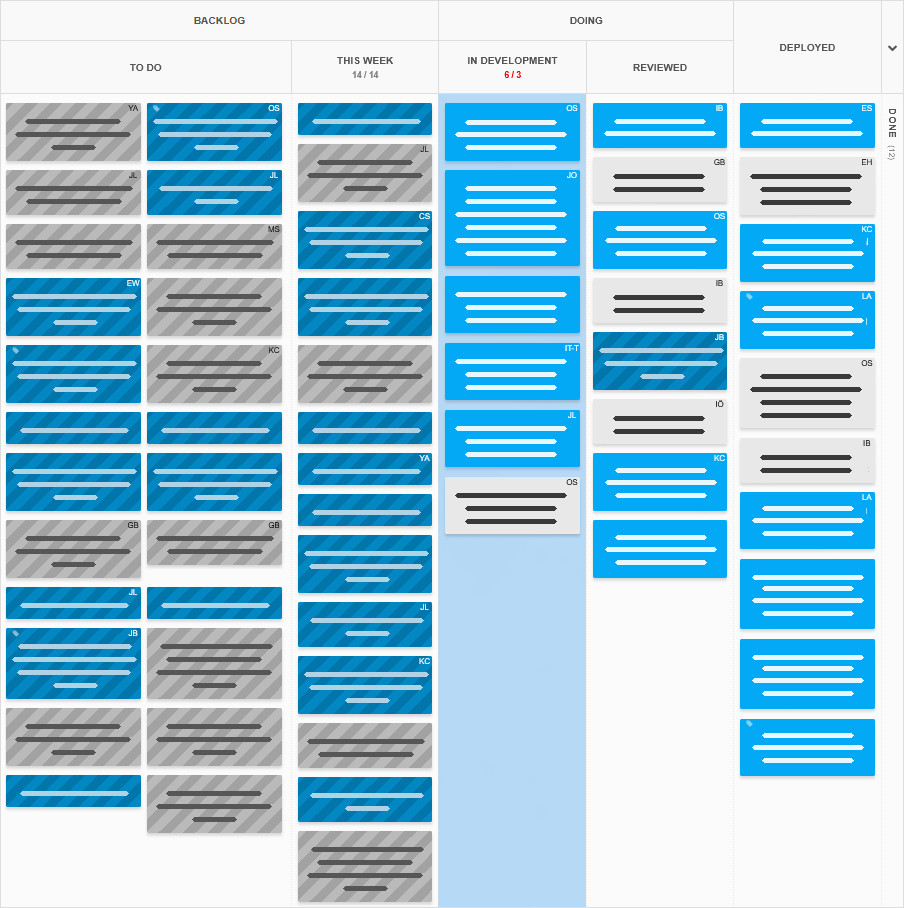
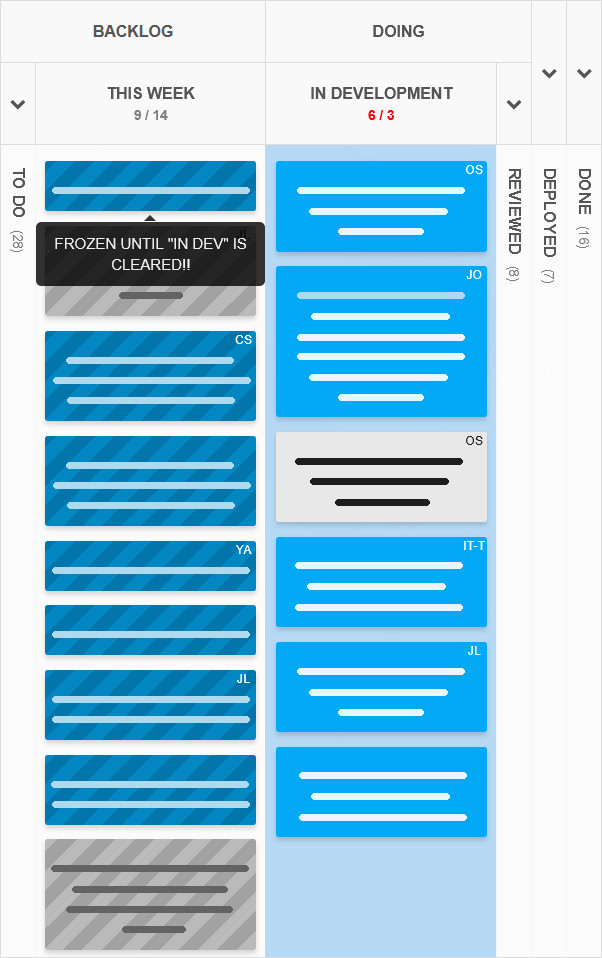
A quick fix to unobserved WIP limits is to pause the intake of new work until the bloated columns are cleared. It may feel uncomfortable, especially under delivery pressure, but this short-term pain restores board credibility in the long run. Once the team sees the flow accelerate again, the habit of respecting WIP limits is likely to strengthen naturally.
2. Visibly tracking card aging
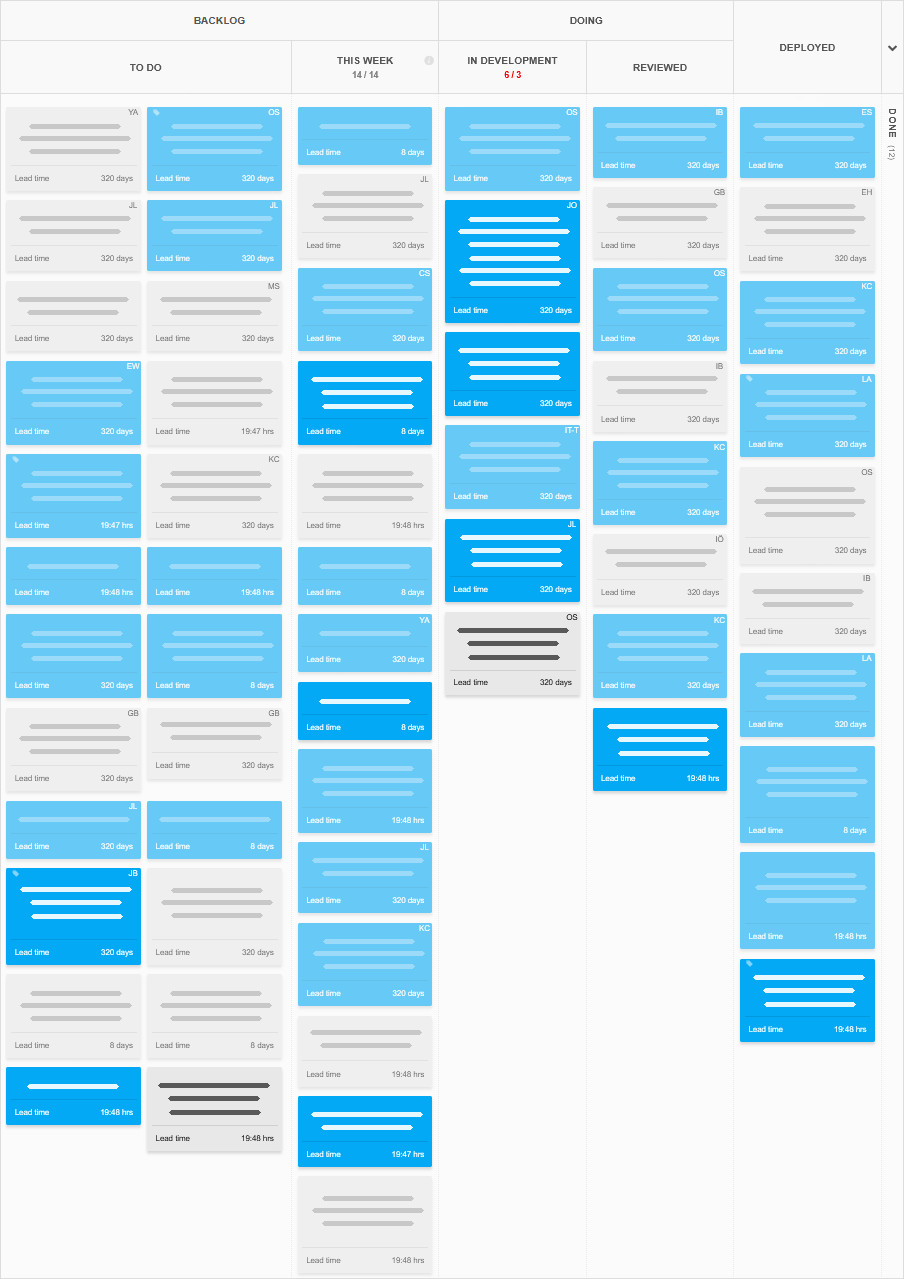
Rather than wait for old tasks to become an embarrassment, highlight cards as they approach a risk/problem threshold, for example, twice the typical cycle time. It will make it possible to notice silent risks and address them during daily stand-ups. It's an easy way to shift focus from ongoing tasks to those at risk of never getting done.
3. Reinforcing policies through conversation
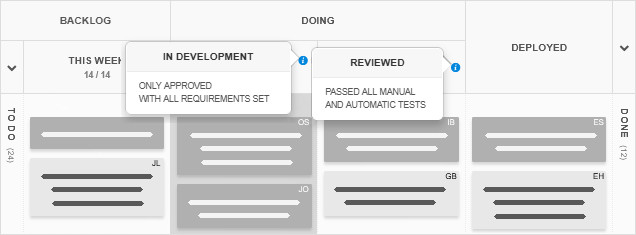
Column policies are everyday work agreements; to revive their importance, discuss them in a retrospective or workflow review meeting. Ask the team which of them are still useful, and which feel outdated. Remove what no longer serves, but recommit to what does matter, and ensure every team member understands the goal of each rule. Display the policy on the board itself as a clear reminder. This combination of clarity and ownership makes adherence far more resilient than strict, arbitral enforcement.
4. Creating slack to allow flow recovery
When the first symptoms of flow breakdown appear, the instinct is often to accelerate. Yet the healthier move is to create slack, allowing a buffer for the team to complete what they’ve started, resolve outdated tasks, and reestablish flow stability before increasing demand. A short pause like this is likely to pay off as a faster, more predictable flow downstream.
Why spotting issues early matters
The earlier you intervene in a flow issue, the less disruptive a correction you can apply. When bloated columns or policy drift are spotted immediately, the system can be realigned within a couple of days. If you wait for the signals to accumulate, the board will have already deteriorated into a meaningless artifact—something no one trusts and that’s only updated for appearances.
Moreover, when a board loses the team's trust, the repair cost often multiplies through experiments with new tooling, mandating leadership interventions, or full-on culture-reviving workshops. Meanwhile, all of this could have been avoided if the initial signals had been acted upon swiftly.
In summary
Kanban is completely self-revealing framework - it will show you the breakdown long before the team members notice it as missed deadlines and mounting frustration.
The challenge is to actively treat the early cracks as data. Teams that consistently intervene with simplicity, and respect their own agreements build resilience, and confidence to trust their system under pressure.
Sign up for a 14-day free trial
to test all the features.
Sign up now and see how we can help
your organization deliver exceptional results.
 Český
Český Deutsch
 Español
 Française
 Italiano
 Polski
 Português
 Русский