
Blog
Don’t Be the Bottleneck: Do’s and Don’ts for Kanban Team Managers09 Feb 2026

For teams using Kanban to track their workflow, the board is a living system reflecting the state and dependencies of work in process. And, for the team manager, the Kanban board should not be a playground for intervention, nor a performance stage, but a diagnostic instrument. Used correctly, the board can sharpen the manager's insight and help improve outcomes. When misused, it can disrupt flow and demoralize the team, distorting the very signals it was designed to surface. So what exactly is the right role for a manager on their team's Kanban board?
Enable flow
The primary function of a Kanban board is presenting the task flow for the purpose of its optimization; the manager should therefore approach it as a steward of that flow, rather than a traffic policeman.
That means identifying both temporary and systemic blockers, as well as structural inefficiencies that prevent work from progressing, as opposed to meddling in the prioritization of individual tasks. For example, if the “Testing” stage is consistently backlogged, the manager’s role is not to reshuffle cards to other developers, but to find an answer to why this keeps happening, and then clear the organizational or resource-level impediments responsible.
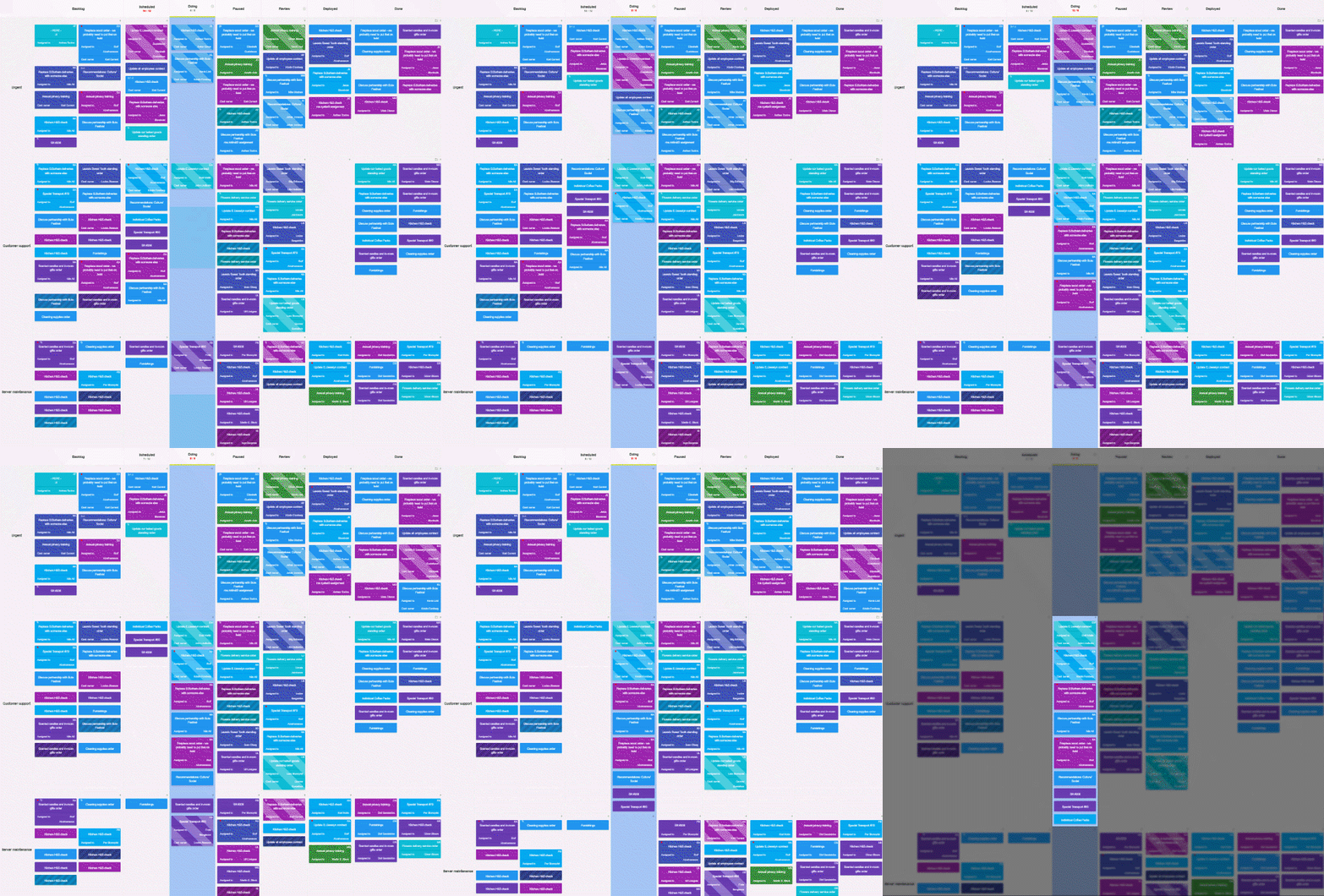
The moment the manager starts moving cards across columns, reactively assigning tasks, or skipping over queues to see any progress on the board is the moment they have stopped enabling flow and started interfering with it through micro-management.
Use the metrics right
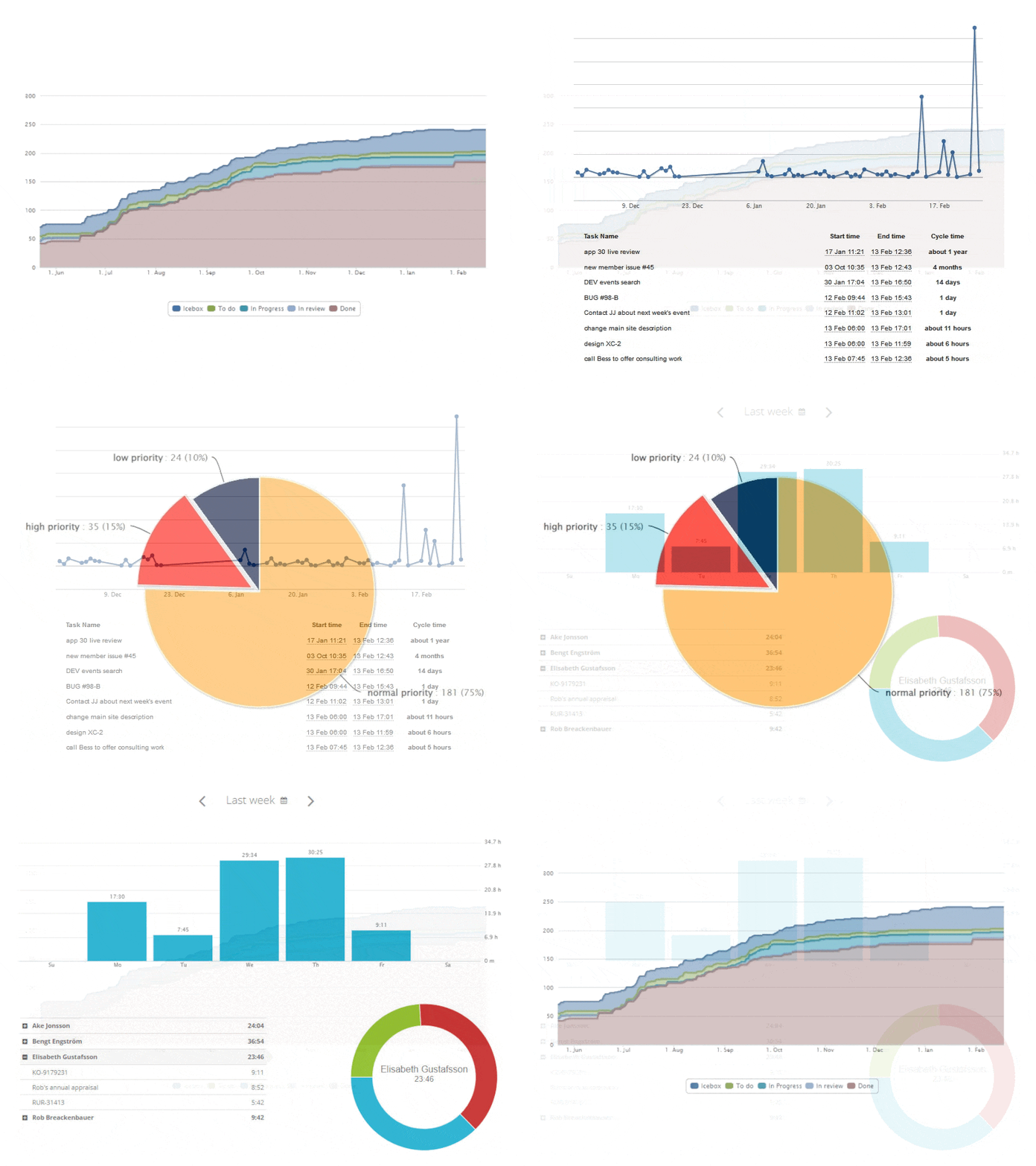
Lead time, cycle time, throughput, and task age should be read as systemic progress indicators; and a skilled manager will treat them as a map of the terrain, not a team scoreboard.
For instance, the team’s average cycle time trending upward might be a signal worth exploring in process reviews, but framing it as a problem with velocity or individual output short-circuits the opportunity to learn. The right question to ask is “what changed in the system?”, not “who’s slowing us down?”
Leveraging metrics for team members' ranking or justifying pressure can quickly tempt the team to game the numbers. And as soon as your team optimizes for how things look on the board rather than how they work, your Kanban system loses fidelity. From then on, you’re simply managing fiction.
Observe without stepping in
Though Kanban boards offer real-time process visibility, that shouldn’t grant license to hover. Micromanagement enacted on a Kanban board doesn’t necessarily take the usual form of constant messaging or instructions, it can be more subtle, e.g., commenting on every card movement, asking for updates on tasks that are still within their expected lead time, or regularly reassigning ownership midstream.
Healthy observation means letting the board speak for itself. A card not being moved for six days is a valuable signal; however, the manager’s first step should be to address the matter in the daily standup or flow review, not interrogate the assignee the moment they notice it.
Kanban is built for self-organization, so teams need autonomy in order to self-manage within the system. Managers who are too hands-on rob their team of such ownership, and with it, also rid them of the capacity to improve independently.
Use WIP limits for what they are
The point of Work-in-Progress limits is not decoration. They should be calibrated to match your team’s capacity and preserve flow. Managers asking for exceptions, “just to squeeze something in” are eroding the purpose of the entire system.
Bypassing column limits creates invisible overload; it inflates queues, dilutes focus, and leads to nothing getting finished, because everything is ..started. A manager might feel that they’re accelerating delivery, but in reality, they’re just pushing the team into a slow-motion stall.
Of course, there will be times when work can not wait, but the right response is to renegotiate priorities, not pile on more and more. Let the team decide which item they will pause or delay to make room. Doing anything else will prove that the board isn’t a serious boundary, just a visual artifact.
Don’t view the board as a report on performance
Turning your team's Kanban visualization into a stage for performance reviews destroys psychological safety and encourages defensive behavior. Your team may start splitting tasks unnaturally to appear more productive, they may avoid large, difficult, or ambiguous tasks, and shun collaboration for fear of losing personal credit.
This is antithetical to flow-based thinking, where the area of concern is the movement of work, not the heroics of the individual.

Don’t re-prioritize without the team
Managers often face external pressures, be that from stakeholders or customers, and it can be tempting to treat the Kanban board as a flexible ledger for last-minute rescheduling. But doing so unilaterally degrades the team’s ability to plan, forecast, and complete work with any rhythm. If you’re re-shuffling the order of tasks several times a week, your upstream process is broken, and the correct managerial move will be not to override the board, but to improve intake and triage upstream.
Don’t use the board for control posturing
Some managers get performative with their team board, dropping multiple comments on cards, tagging team members, drawing attention to stagnation; and not because it’s helpful, but to signal their vigilance. Unsurprisingly, such signals often read as scrutiny, not support.

The more helpful posture is quiet engagement: being present, asking questions at the system level, letting the board teach you what’s working and what isn’t, and then acting on that insight away from the spotlight.
Lead the system, not the cards
Your team's Kanban board is a reflection of your delivery system, and the manager shifting from controlling tasks to improving the system allows it to become an engine for collective clarity and continuous improvement.
In summary, managerial maturity in Kanban-driven environments shows up as a specific, intentional kind of involvement. The best managers are those whose presence isn’t disruptive, but clarifying and catalytic: they don't fix the flow, they free it.
Sign up for a 14-day free trial
to test all the features.
Sign up now and see how we can help
your organization deliver exceptional results.
 Český
Český Deutsch
 Español
 Française
 Italiano
 Polski
 Português
 Русский